Like good food, good data tastes good.
How can data taste good?
Let’s start with what we know about how to “Make food taste good” and then we can understand how the same principles are useful for Data Quality.
A long, long time ago in a land far away, we were in the midst of some staffing changes in the kitchen and wanted to codify some of how “Things worked” (in the Sent Sovi kitchen at least).
We came up with this list of 20 “Kitchen Axioms” that were laminated and posted as a nice 5×7 sign in each station, and talked about during our interview process.
If you want to know what it is like to work in a professional kitchen, in the most reductive sense, one could liken it to a daily exercise against entropy.
Fine dining places incredible demands, physical, mental and emotional in all those who are involved. This shared commitment to the guest is what drives excellence in ambitious kitchens. These axioms made that possible for us.
We discussed what is important in order to put all of ourselves into making “Good tasting food” with minimum wasted effort and maximum effect for the guest. These axioms helped.
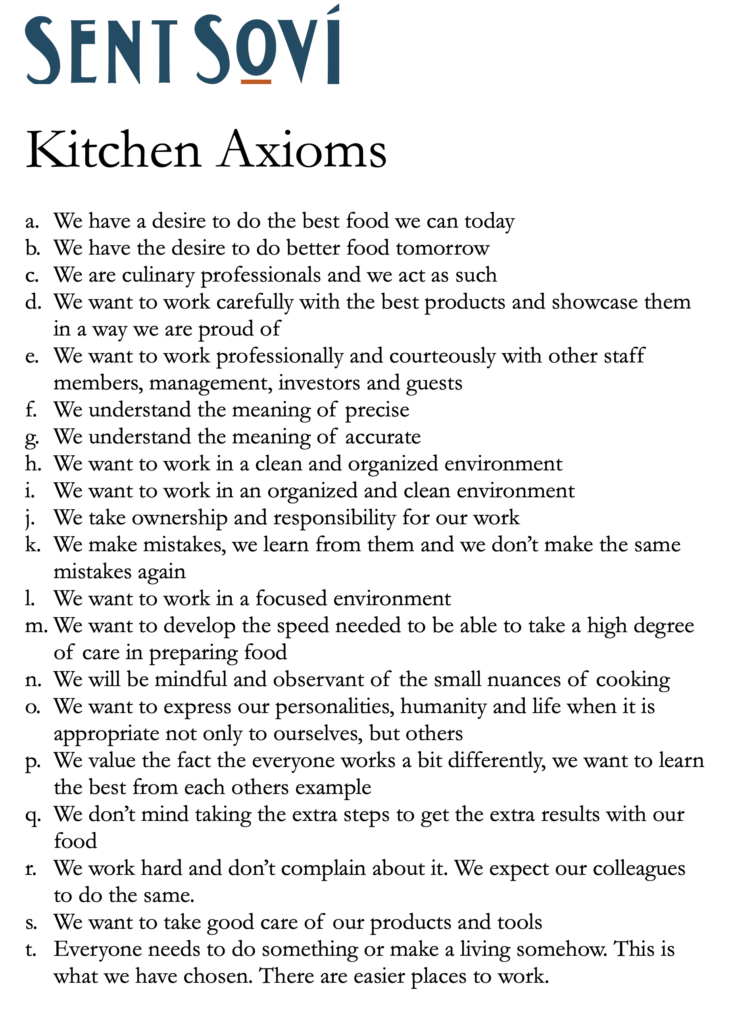
These are axioms that beyond statement and axiomatic acceptance, invite further discussion, reflections and reduction to practice.
In short, the business of food is so unforgiving that as a chef and restauranteur, we needed to pull off minor miracles daily in the pursuit of betterment or some days simply continuation of the establishment. One plate at a time, year after year.
As long as one applies these axioms, there is a much higher chance of success and a much more apparent path to recover from minor and major errors as a team.
It is this precise commitment and ownership of ones work outlined in these axioms that that allows (and gives the greatest chance of) the right food at the right time at the right temperature to be delivered to the guests with the right service, utensils, and beverages.
Only then can it “Taste good”.
Data is very much the same way.
Much like every single ingredient in my restaurant, each piece of data has a story to tell. That story may be directly from the “source” or may trace a complicated path through international supply chains and vendor systems.
Like a farmers market haul, data must be cleaned and sorted, prepared and stored. It must be respected. Edge cases must be considered.
Like food, data can reward ingenuity and creativity and punish lax techniques. Therefore, a methodical and disciplined approach to data that encourages asking questions and understanding context is useful as a framework (as in the kitchen Axioms).
Getting the right data to the right place at the right time in the right context (with the right governance and security) is what makes data “Taste good”.
Some people want Excel files, others want csv, S3 buckets or apis. Ketchup, mustard, mayo.
Good data tastes good, make it easy to eat.
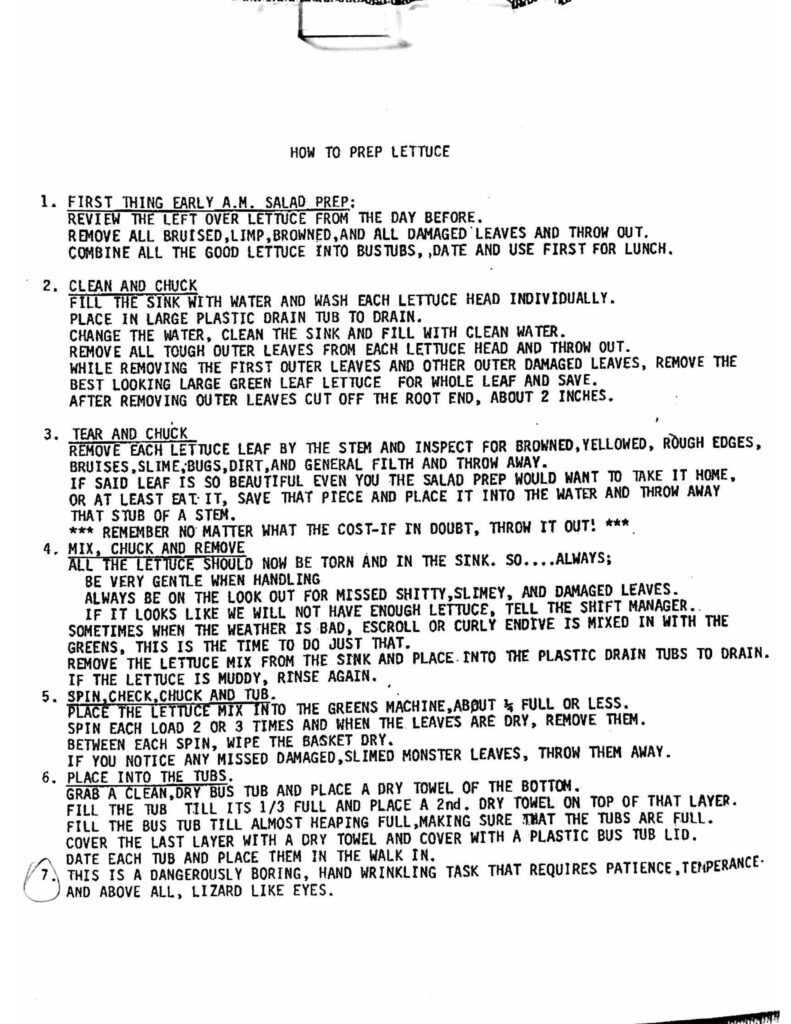
Bonus: How to prep lettuce according to Jeremiah Tower